

Why Your Wix Website Isn't Getting You Customers (And What Actually Works)
Jon Alcon • May 5, 2026

You built your own website. It looks decent, it was cheap, and it only took a weekend. So why isn't your phone ringing?


If you used Wix, Squarespace, or another DIY builder, you're not alone — and you're not imagining things. The website isn't the problem. The invisibility is. And that's an SEO problem.


What SEO Actually Means (And Why It Matters More Than Your Website Design)

SEO stands for Search Engine Optimization. In plain terms, it's how Google decides whether to show your business when someone nearby searches for what you offer.


Think about your own behavior. When you need a plumber, a dentist, or a marketing agency, you Google it. You click one of the first three results. You almost never scroll to page two. Your customers do the exact same thing.


Here's the sobering reality: 93% of all online experiences begin with a search engine, and the top three Google results capture over 54% of all clicks. If you're not ranking, you're essentially invisible.

No amount of pretty design fixes that.


The Problem With DIY Builders Like Wix

Wix and similar platforms aren't built to get you found. They're built to get you online fast. There's a big difference.

Here's what I see constantly with DIY-built sites:


Slow load times. Wix sites are notorious for bloated code that slows page speed. Google uses speed as a ranking factor. A site that loads in over 3 seconds loses roughly 40% of visitors before they even see your homepage. That's customers walking out before you say hello.


Weak technical SEO. Wix gives you basic meta title and description fields, but what it doesn't give you is proper site architecture, schema markup, clean URL structures, or the technical foundation that signals authority to Google. These details are invisible to you but highly visible to search engines.


Cookie-cutter structure. Google rewards websites that are built with a clear topical structure and relevant, optimized content. Wix templates are designed to look good, not to rank well. Out of the box, they're not structured the way Google wants to see them.


Limited local SEO capability. If you're a small business serving a specific area (say, the Denver metro or Castle Rock, Colorado), local SEO is everything. Showing up in Google's "local pack" (the map results at the top of a search) can drive enormous foot traffic and calls. Wix gives you almost no real tools to compete there.


"But My Website Has SEO Features Turned On"

This is one of the most common things I hear. Wix does have an "SEO Wiz" and some basic optimization settings. I'm not going to pretend they don't exist.


But here's the truth: turning on basic SEO settings is like putting a spoiler on a family sedan and calling it a race car. The foundation isn't built for performance.


Real SEO involves ongoing keyword research, competitor analysis, content strategy, backlink building, local citation management, Google Business Profile optimization, and continuous performance tracking. That's not a feature you toggle on. It's a discipline.


A 2023 study found that only 0.63% of Google searchers click on results from page two. If your DIY site isn't actively, intentionally optimized, page two (or page ten) is where it lives.


What Professional SEO Actually Does for a Small Business

When SEO is done right, your website becomes your best salesperson. It works 24/7, brings in qualified leads, and builds compounding results over time.


Here's what changes when you invest in real SEO:

You show up when it counts. Targeted keyword strategy means your business appears when local customers are actively searching for your product or service. These are high-intent visitors, not casual browsers.


You build trust before the first conversation. Businesses that rank at the top of Google are perceived as more credible. It's not fair, but it's true. Ranking well is social proof.


You stop paying forever just to be seen. Paid ads stop the moment you stop paying. Organic SEO builds authority that compounds. A well-optimized page can drive traffic for years.


Your competitors stop eating your lunch. If you're not ranking, someone else in your market is. Every customer that finds your competitor first is a customer you didn't get.


What We Do Differently at ZING

At ZING, we don't just build websites. We build websites that are designed from the ground up to rank and convert.

Every site we build includes proper technical SEO foundations: clean code, optimized site speed, mobile-first design, structured data, and local SEO targeting. We don't bolt SEO on as an afterthought. It's baked in from day one.


From there, our Boost Plan and Dominate Plan layer on the ongoing SEO work that keeps your rankings climbing: keyword targeting, content strategy, Google Business Profile management, backlink building, and monthly reporting so you can see exactly what's working.


And if you're just getting started and want a professionally built site with solid SEO foundations at an accessible price, our Discover Plan gets you there for $59/month.


The difference between a Wix site and a ZING site isn't just how it looks. It's whether Google can find it and whether customers actually call you.


The Bottom Line

A DIY website builder can put you online. Only a real SEO strategy can make you visible.


Small businesses can't afford to be invisible. Your website should be working for you every single day, pulling in new customers, building your credibility, and growing your revenue while you focus on running your business.


If your current website isn't doing that, it's time to have a conversation.


Book a free call with Jon at ZING and let's take an honest look at where you stand and what it would take to start getting found.

Call us at 720-509-0702 - we'd love to help.

Jon Alcon

Business Advisor

Direct Line; 720-509-0702

333 Perry St, Castle Rock, CO 80104

jon@zing-work.com | zing.work

Jon is a Business Advisor at ZING, a web design and digital marketing company based in Castle Rock, Colorado. He helps small businesses stop being invisible online and start turning their websites into real growth engines.

By Elliot Farmer April 20, 2026
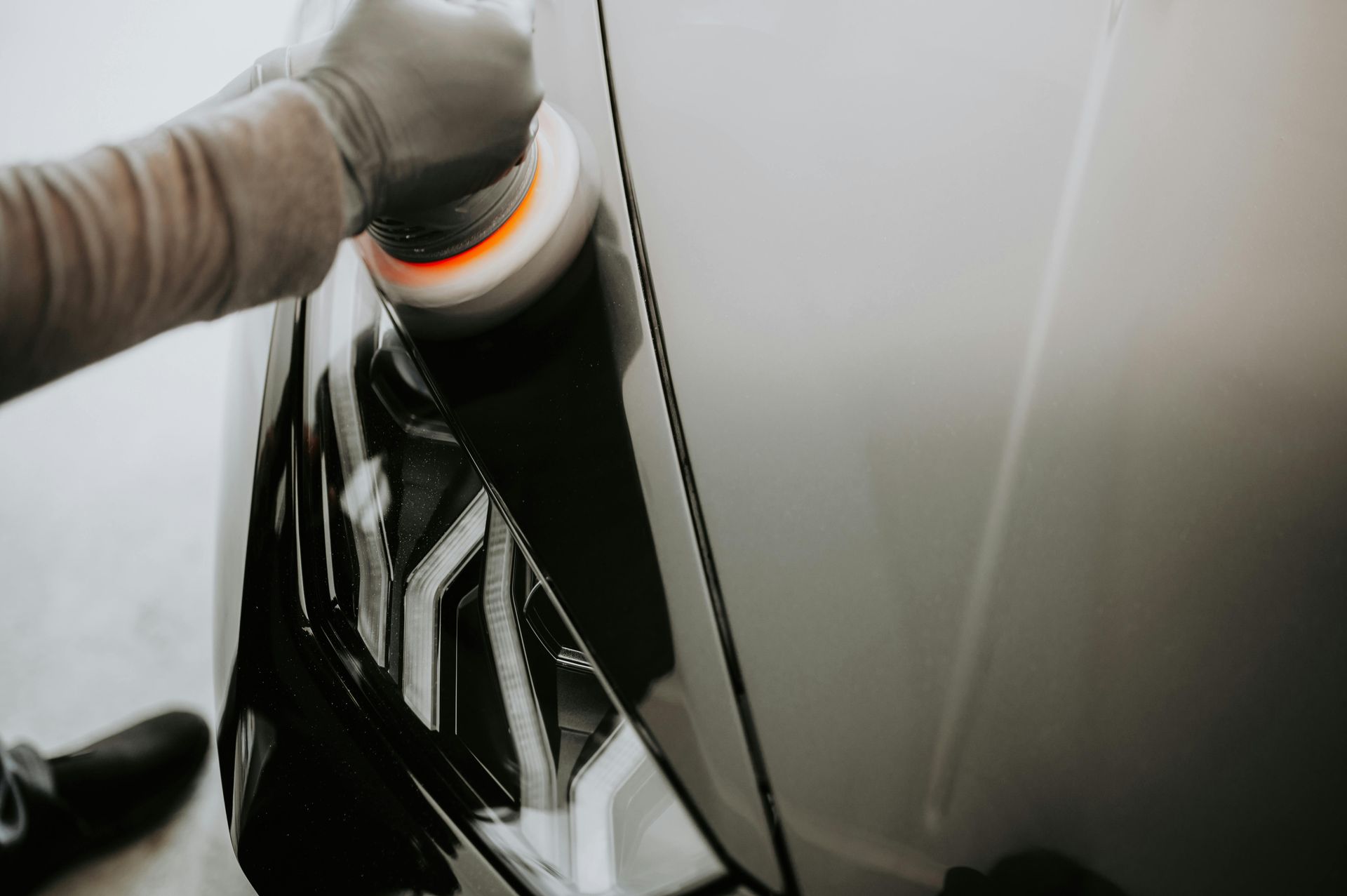
So you've decided you need a website for your detailing business. Good. You're already ahead of most of the shops in your city.
By Elliot Farmer April 20, 2026
If your entire online presence as a detailer is a Google Business Profile and an Instagram feed, you're losing customers every single day. Not maybe. Not sometimes. Every day.
By Jon Alcon March 26, 2026
Your new ZING website is live — now what? Here are the 10 things every small business owner should do first to get real results fast.
website conversion rate for small businesses
By Elliot Farmer March 23, 2026
Most small business websites convert less than 2% of visitors. Learn how professional design and AI chat can turn your existing traffic into real leads.
By Sean Meadows March 17, 2026
Whether your website is still being built or has just gone live, exciting things are already in motion. Your online presence is taking shape, the foundations are being put in place, and Google will start discovering your pages very soon.
By Jon Alcon March 11, 2026
Missing from local directories? You're invisible to customers searching nearby. Here's what it's costing your small business and how to fix it fast.
By Jon Alcon March 9, 2026
7 Jobs and Industries AI Simply Cannot Replace Your neighbor's kid just got laid off. Your cousin is nervous about her marketing role. And somewhere in a boardroom, someone is asking how many people they can replace with a chatbot. The fear is real, and it's not entirely unfounded. But here's what the headlines keep missing: AI is not the universal job-killer it's been made out to be. In fact, a landmark 2024 Microsoft study that analyzed over 200,000 real AI conversations found that for many jobs, AI can only handle a fraction of the actual work. And for some industries? It barely makes a dent.  More importantly, the same research confirmed something we at ZING have believed all along: the businesses and workers who lean into human connection, hands-on expertise, and real relationships are the ones who will not just survive this shift, but thrive in it. Here are seven jobs and industries where humans still hold every card. 1. Skilled Trades: The Robots Can't Crawl Under Your Sink Electricians, plumbers, HVAC techs, roofers, welders. These roles scored near zero on Microsoft's AI applicability scale, and it makes complete sense when you think about it. Skilled tradespeople work in unpredictable, physical environments where no two jobs are exactly alike. Diagnosing a strange sound in an engine, squeezing into a crawl space, reading a failing system by feel and experience, these are things a language model simply cannot do. The numbers back this up. Construction and skilled trades are consistently ranked among the least threatened by automation, and the Bureau of Labor Statistics projects strong growth in these fields well into the 2030s. If you run a trade business, this is actually great news for your online presence. Customers are searching for trustworthy, local tradespeople every single day. The question is whether they can find you. 2. Healthcare and Hands-On Patient Care AI can read an X-ray. What it cannot do is hold a patient's hand, read the room in an emergency, or navigate the thousand small judgment calls a nurse makes every shift. Nurse practitioners are projected to grow by 52% from 2023 to 2033, far faster than almost any other profession. Physical therapists, surgical assistants, and home health aides all fall into the same category: roles built on physical presence, emotional attunement, and moment-to-moment human decision-making. AI will absolutely become a tool in healthcare. It already is. But the human at the center of care is not going anywhere. 3. Mental Health and Counseling There is no algorithm for grief. There is no chatbot that can sit with someone through a panic attack and help them feel less alone. Therapists, counselors, social workers, and coaches work in a space that requires something AI fundamentally lacks: genuine emotional presence. The therapeutic relationship itself, the feeling of being truly heard and understood by another human being, is the mechanism through which healing happens. Research consistently places social work and counseling at the lowest end of automation risk. In fact, the World Economic Forum projects 3 million new jobs in education and counseling-adjacent fields by 2027. 4. Educators and Coaches AI can build a personalized learning plan. It can quiz a student and adjust the difficulty. What it cannot do is notice that a kid has been quiet for three days and something is clearly wrong at home. Teachers, coaches, and mentors operate in a deeply relational space. They read body language, adapt in real time, build trust over months and years, and do the kind of behavioral and emotional work that no platform can replicate. The role of educators will shift, and AI will handle more of the administrative load. But the human who inspires, challenges, and believes in someone? That role is irreplaceable. 5. Creative Leadership and Strategic Thinking Here is a nuance worth sitting with: AI can produce content, but it cannot produce vision. AI can generate a logo concept. It cannot build a brand identity rooted in a community's history and values. It can write a blog post (yes, including ones like this), but it cannot develop a three-year marketing strategy for a business it has never met, served, or truly understood. The World Economic Forum places leadership, critical thinking, and people management at the top of required skills through 2030. Roughly 80% of leadership work, including culture building, conflict resolution, ethical decisions, and driving real change, stays firmly human. What we find at ZING is that the clients who stand out are the ones with a clear voice and real perspective. AI can help amplify that. It cannot manufacture it. 6. Local Service Businesses Built on Relationships This one is personal to us. We are based in Castle Rock, Colorado, and we work with small businesses every day. Restaurants, gyms, salons, contractors, boutique retailers. These businesses are not competing on data processing speed. They are competing on trust, personality, and the feeling you get when you walk through the door. A customer who has used the same plumber for 10 years is not going to switch because an AI-powered competitor has a slicker website. That relationship has value that no algorithm can replicate. Here is the truth about small businesses and AI: the threat is not that AI will replace you. The threat is that businesses with a weak online presence will lose visibility to competitors who use AI tools more effectively to reach customers first. That is exactly the problem we solve. Whether you are just starting to build your online footprint with our Discover Plan or you are ready to go full-throttle with the Dominate Plan , the goal is always the same: make sure the right customers can find you before they find someone else. 7. Personal and Caregiving Services Childcare workers. Personal trainers. Hair stylists. Elder care providers. These roles scored at the very bottom of every automation risk study for a simple reason: the service is the human. You are not paying someone to process information. You are paying for their presence, their attention, and the relationship you have built with them. Food preparation and personal service jobs are projected to add over 500,000 positions by 2033. These are not jobs that technology will hollow out. They are jobs that grow as people seek more human connection in a world that keeps getting more digital. So What Does This All Mean? AI is a tool. A powerful one. But it is a tool that works best in the hands of people who have something real to offer: real skills, real relationships, real expertise, and a real presence in their community. The businesses we see winning right now are not the ones hiding from AI. They are the ones using it strategically while doubling down on the things that make them irreplaceable: their story, their people, and their connection to the customers they serve. If you are a small business owner wondering how to stay visible and competitive without losing what makes you human, that is the exact conversation we love having. Check out our plans at zing.work or learn more about how we work . We would love to help you show up online in a way that actually reflects who you are
By Caden Wightman March 4, 2026
Wondering how long SEO takes to work? Learn realistic timelines, what drives results faster, and how ZING helps small businesses grow online. (154 chars)
website mistakes small business
By Jake Friss February 25, 2026
Is your website invisible online? Discover the 3 biggest website mistakes small businesses make and what to do about each one.
website for new business
By Elliot Farmer February 25, 2026
Your website is your first impression and your best salesperson. Here's why every new business needs one from day one, and how to make it work hard for you.