

Why Local Directory Listings Can Make or Break Your Small Business
Jon Alcon • March 11, 2026

Why Local Directory Listings Can Make or Break Your Small Business

Right now, someone in your town is searching for exactly what you offer. They typed it into Google, looked at the first few results, and called one of your competitors. Not because your competitor is better. Because your competitor showed up and you didn't.


That is the quiet, invisible cost of ignoring local directory listings. And it happens to small businesses every single day.

If you are new to SEO and wondering where to start, local directories are one of the most powerful and most overlooked places to begin. Here is what you need to know.


What Are Local Directory Listings, Exactly?

Think of local directories as the modern version of the Yellow Pages, except they are online, they feed directly into Google's search results, and millions of people use them every day.


A local directory listing is simply your business's information, your name, address, phone number, website, hours, and category, published on platforms like Google Business Profile, Yelp, Bing Places, Apple Maps, and dozens of others.

When your information is on these platforms and it's accurate, Google trusts your business more. And when Google trusts your business more, it shows you to more people searching nearby.


The Numbers Don't Lie: Local Search Is Where Customers Are

Before we get into what can go wrong, it helps to understand just how much is at stake.

98% of customers now search online for nearby businesses, up from 90% just a few years ago. 80% of U.S. consumers search for local businesses on a weekly basis, and 32% do it daily.


Here is the stat that really gets our attention at ZING: 76% of "near me" mobile searches lead to a store visit within 24 hours. These are not people casually browsing. They are ready to buy, and they are looking for a business to trust right now.


Businesses in the Google local pack, the top three map results you see in any local search, receive 126% more traffic and 93% more actions like calls, website clicks, and driving directions than businesses ranked just below them.

The local pack is prime real estate. And local directory listings are one of the main ways you earn a spot there.


What It Actually Costs You to Not Be Listed

This is the part most people don't think about until it's too late.


When your business is missing from key directories, or worse, listed with wrong information, you are not just missing opportunities. You are actively losing customers to whoever does show up.


62% of consumers say they would avoid using a business if they found incorrect information about it online. That means a wrong phone number, an old address, or inconsistent business hours is not a minor inconvenience. It is a reason people walk away and never come back.


73% of consumers lose trust in a business if they find incorrect information on online directories. Trust, once lost in a local search context, is almost impossible to recover. The customer just moves to the next result.


We see this pattern constantly with new clients who come to us at ZING. A local business owner has been operating for years, has happy customers, does great work, and cannot figure out why new customers are hard to come by. Nine times out of ten, we find the same thing: they are either missing from the key directories entirely or their information is scattered and inconsistent across the web. The business is invisible in local search, and they had no idea.


The NAP Problem: Small Errors With Big Consequences

NAP stands for Name, Address, and Phone number. It sounds simple, but getting it wrong is one of the most common and costly mistakes small businesses make online.


Here is the issue. If your business is listed as "ZING Web Design" on one directory, "Zing Web Design LLC" on another, and "ZING" on a third, Google sees those as potentially three different businesses. That inconsistency chips away at your credibility in the algorithm, and your local rankings drop as a result.


Listings with consistent NAP across directories are less likely to be suppressed or show conflicting information. Consistency is not just good housekeeping. It is a ranking signal.


The first thing we check when a new client comes on board at ZING is their citation consistency. You would be surprised how often a business that has been operating for five or ten years has a dozen slightly different versions of their own information floating around online.


Which Directories Actually Matter?

Not all directories carry equal weight, and you do not need to be listed on hundreds of them. Focusing on 15 to 20 high-authority, industry-relevant directories yields better results than spreading your business information across dozens of low-quality sites.


Here are the ones that matter most for most small businesses:

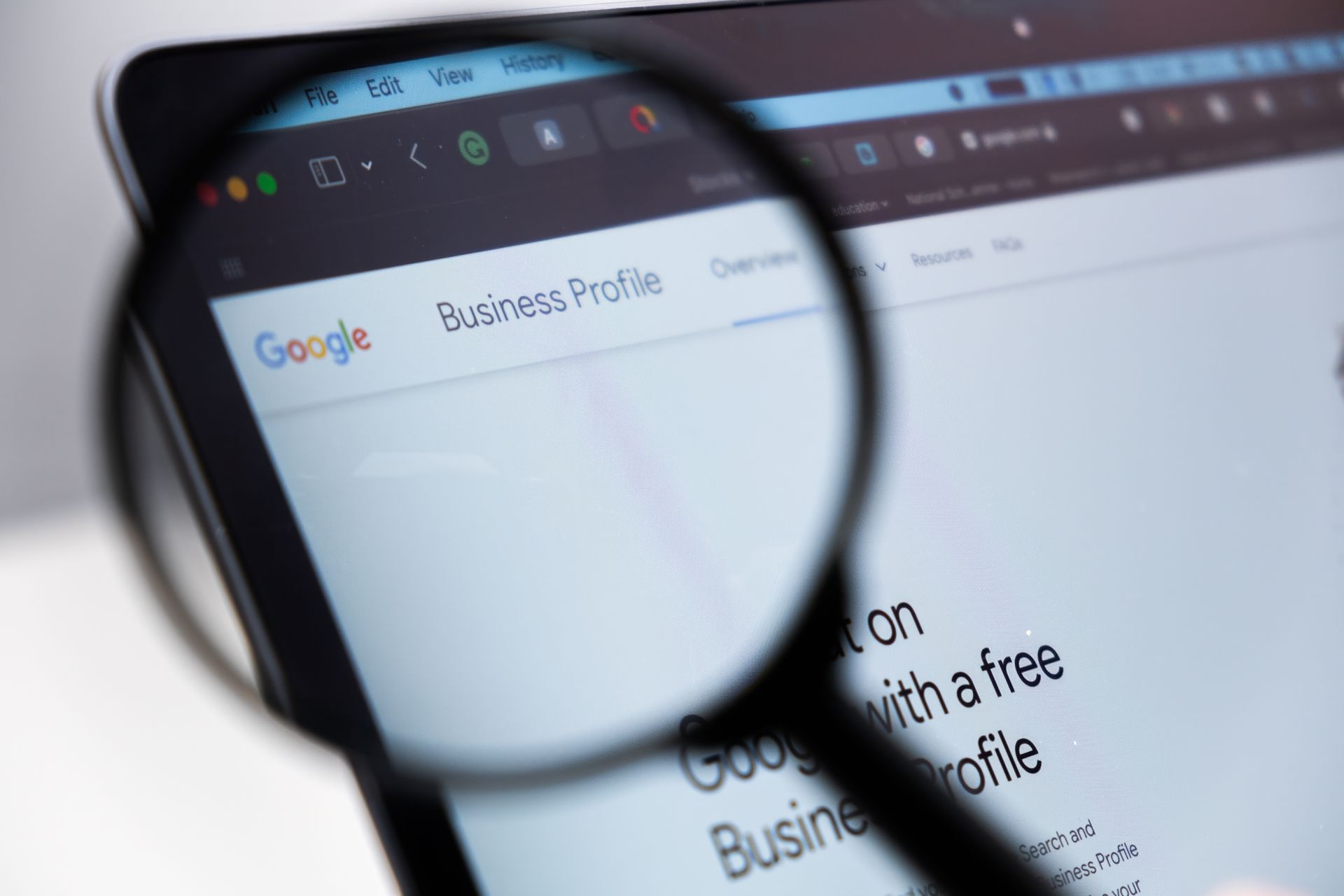
  • Google Business Profile - This is non-negotiable. It is the single most important local listing you can have. Businesses with complete Google Business Profiles get 7x more clicks than those with incomplete profiles.
  • Apple Maps - A large portion of mobile searches happen on iPhones, and Apple Maps is the default.
  • Bing Places - Overlooked by most businesses, which means it is an easy win.
  • Yelp - Still heavily used in service industries, restaurants, and home services.
  • Facebook Business - Doubles as both a directory and a social proof platform.
  • Your local Chamber of Commerce - A high-authority local citation that also builds community credibility.


Beyond these core platforms, industry-specific directories, like Houzz for home services or Healthgrades for healthcare, can be valuable depending on what you do.


It Is Not Just About Being Found. It Is About Being Trusted.

Here is something that often surprises small business owners new to this: local directories do not just help people find you. They help people decide whether to trust you before they ever reach out.


Customers are 2.7 times more likely to trust a business with a complete Google Business Profile. A complete profile with accurate information, photos, business hours, and reviews signals to both Google and to potential customers that you are a legitimate, active, professional business.


75% of consumers read reviews regularly or always when searching for local business information. And 70% of consumers say they rarely visit an unfamiliar business before checking online reviews first.

Your directory listing is often the first impression someone gets of your business. Make sure it reflects the quality of what you actually deliver.


Where ZING Comes In

Getting listed is step one. But keeping your listings accurate, consistent, and optimized across the web is an ongoing job, and it is one that most small business owners simply do not have time to manage on top of running their actual business.


At ZING, local visibility is built into everything we do. Whether you are just getting started with our Discover Plan or you are ready for a full-service local SEO strategy with our Boost Plan, we make sure your business shows up where your customers are looking.


We work with small businesses locally here in Castle Rock and across the country, and the pattern is always the same: the businesses that invest in their local presence consistently out-perform the ones that do not, even when the competition has a bigger budget.


Start Here: Your Local Listings Checklist

If you want to take action today, here is where to focus first:

  1. Claim and complete your Google Business Profile at business.google.com
  2. Make sure your business name, address, and phone number match exactly across every platform
  3. Add real photos, your hours, your website URL, and a clear description of what you do
  4. Claim your listings on Bing Places, Apple Maps, and Yelp
  5. Ask satisfied customers to leave reviews on Google


These five steps will put you ahead of the majority of small businesses in your area who have never touched their local listings.


The Bottom Line

Local directory listings are not a set-it-and-forget-it task, but they are one of the highest-return investments you can make in your online presence. The cost of not doing it is real: missed calls, lost customers, and a competitor getting the business that should have been yours.


If you are not sure where your business currently stands online, we offer a free discovery call where we can show you exactly what customers see, and do not see, when they search for what you offer. Book your free call at zing.work and let's find out where you are leaving money on the table.

Call us at 720-509-0702 - we'd love to help.

Jon Alcon

Business Advisor

Direct Line; 720-509-0702

333 Perry St, Castle Rock, CO 80104

jon@zing-work.com | zing.work

By Jon Alcon March 9, 2026
7 Jobs and Industries AI Simply Cannot Replace Your neighbor's kid just got laid off. Your cousin is nervous about her marketing role. And somewhere in a boardroom, someone is asking how many people they can replace with a chatbot. The fear is real, and it's not entirely unfounded. But here's what the headlines keep missing: AI is not the universal job-killer it's been made out to be. In fact, a landmark 2024 Microsoft study that analyzed over 200,000 real AI conversations found that for many jobs, AI can only handle a fraction of the actual work. And for some industries? It barely makes a dent.  More importantly, the same research confirmed something we at ZING have believed all along: the businesses and workers who lean into human connection, hands-on expertise, and real relationships are the ones who will not just survive this shift, but thrive in it. Here are seven jobs and industries where humans still hold every card. 1. Skilled Trades: The Robots Can't Crawl Under Your Sink Electricians, plumbers, HVAC techs, roofers, welders. These roles scored near zero on Microsoft's AI applicability scale, and it makes complete sense when you think about it. Skilled tradespeople work in unpredictable, physical environments where no two jobs are exactly alike. Diagnosing a strange sound in an engine, squeezing into a crawl space, reading a failing system by feel and experience, these are things a language model simply cannot do. The numbers back this up. Construction and skilled trades are consistently ranked among the least threatened by automation, and the Bureau of Labor Statistics projects strong growth in these fields well into the 2030s. If you run a trade business, this is actually great news for your online presence. Customers are searching for trustworthy, local tradespeople every single day. The question is whether they can find you. 2. Healthcare and Hands-On Patient Care AI can read an X-ray. What it cannot do is hold a patient's hand, read the room in an emergency, or navigate the thousand small judgment calls a nurse makes every shift. Nurse practitioners are projected to grow by 52% from 2023 to 2033, far faster than almost any other profession. Physical therapists, surgical assistants, and home health aides all fall into the same category: roles built on physical presence, emotional attunement, and moment-to-moment human decision-making. AI will absolutely become a tool in healthcare. It already is. But the human at the center of care is not going anywhere. 3. Mental Health and Counseling There is no algorithm for grief. There is no chatbot that can sit with someone through a panic attack and help them feel less alone. Therapists, counselors, social workers, and coaches work in a space that requires something AI fundamentally lacks: genuine emotional presence. The therapeutic relationship itself, the feeling of being truly heard and understood by another human being, is the mechanism through which healing happens. Research consistently places social work and counseling at the lowest end of automation risk. In fact, the World Economic Forum projects 3 million new jobs in education and counseling-adjacent fields by 2027. 4. Educators and Coaches AI can build a personalized learning plan. It can quiz a student and adjust the difficulty. What it cannot do is notice that a kid has been quiet for three days and something is clearly wrong at home. Teachers, coaches, and mentors operate in a deeply relational space. They read body language, adapt in real time, build trust over months and years, and do the kind of behavioral and emotional work that no platform can replicate. The role of educators will shift, and AI will handle more of the administrative load. But the human who inspires, challenges, and believes in someone? That role is irreplaceable. 5. Creative Leadership and Strategic Thinking Here is a nuance worth sitting with: AI can produce content, but it cannot produce vision. AI can generate a logo concept. It cannot build a brand identity rooted in a community's history and values. It can write a blog post (yes, including ones like this), but it cannot develop a three-year marketing strategy for a business it has never met, served, or truly understood. The World Economic Forum places leadership, critical thinking, and people management at the top of required skills through 2030. Roughly 80% of leadership work, including culture building, conflict resolution, ethical decisions, and driving real change, stays firmly human. What we find at ZING is that the clients who stand out are the ones with a clear voice and real perspective. AI can help amplify that. It cannot manufacture it. 6. Local Service Businesses Built on Relationships This one is personal to us. We are based in Castle Rock, Colorado, and we work with small businesses every day. Restaurants, gyms, salons, contractors, boutique retailers. These businesses are not competing on data processing speed. They are competing on trust, personality, and the feeling you get when you walk through the door. A customer who has used the same plumber for 10 years is not going to switch because an AI-powered competitor has a slicker website. That relationship has value that no algorithm can replicate. Here is the truth about small businesses and AI: the threat is not that AI will replace you. The threat is that businesses with a weak online presence will lose visibility to competitors who use AI tools more effectively to reach customers first. That is exactly the problem we solve. Whether you are just starting to build your online footprint with our Discover Plan or you are ready to go full-throttle with the Dominate Plan , the goal is always the same: make sure the right customers can find you before they find someone else. 7. Personal and Caregiving Services Childcare workers. Personal trainers. Hair stylists. Elder care providers. These roles scored at the very bottom of every automation risk study for a simple reason: the service is the human. You are not paying someone to process information. You are paying for their presence, their attention, and the relationship you have built with them. Food preparation and personal service jobs are projected to add over 500,000 positions by 2033. These are not jobs that technology will hollow out. They are jobs that grow as people seek more human connection in a world that keeps getting more digital. So What Does This All Mean? AI is a tool. A powerful one. But it is a tool that works best in the hands of people who have something real to offer: real skills, real relationships, real expertise, and a real presence in their community. The businesses we see winning right now are not the ones hiding from AI. They are the ones using it strategically while doubling down on the things that make them irreplaceable: their story, their people, and their connection to the customers they serve. If you are a small business owner wondering how to stay visible and competitive without losing what makes you human, that is the exact conversation we love having. Check out our plans at zing.work or learn more about how we work . We would love to help you show up online in a way that actually reflects who you are
By Caden Wightman March 4, 2026
Wondering how long SEO takes to work? Learn realistic timelines, what drives results faster, and how ZING helps small businesses grow online. (154 chars)
website mistakes small business
By Jake Friss February 25, 2026
Is your website invisible online? Discover the 3 biggest website mistakes small businesses make and what to do about each one.
website for new business
By Elliot Farmer February 25, 2026
Your website is your first impression and your best salesperson. Here's why every new business needs one from day one, and how to make it work hard for you.
website maintenance SEO
By Caden Wightman February 24, 2026
An outdated website is hurting your Google rankings and costing you customers. Learn how regular website maintenance builds trust and drives more business.
By Zach Meade February 24, 2026
How Small Businesses Can Grow Online Without Overpaying
A person using a laptop with an AI interface, with blue and purple tones.
By Kristina Velpel October 8, 2025
Is your website ready for the AI era? Learn how ZING Website Design helps small businesses prepare for AI search, automation, and authority building with done-for-you SEO and FAQs.
Person holding smartphone with shop icon and stars, showing online business reviews.
By Kristina Velpel October 8, 2025
Your customers are searching online — can they find you? Learn how ZING Website Design helps small businesses dominate local listings and attract more leads.
Abstract blue and teal waves on a dark background, with a subtle, glowing effect.
By Kristina Velpel October 8, 2025
Adding a chat to your website helps capture more leads, boost conversions, and deliver instant customer service. Learn how ZING makes it easy.